

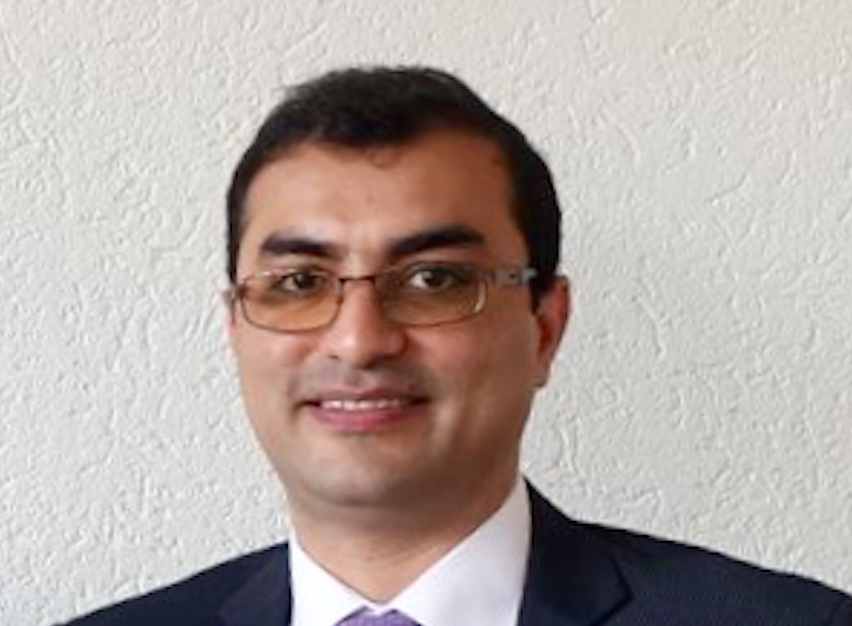
Prof. Afaque Shams
Founding Director, Interdisciplinary Research Center for Industrial Nuclear Energy (IRC-INE) Associate Professor, Department of Mechanical Engineering King Fahd University of Petroleum and Minerals (KFUPM) Dhahran, Saudi ArabiaAbstract
The Importance of High-Fidelity Numerical Simulations in Safer and Smarter Energy Solutions
Department of Mechanical Engineering, King Fahd University of Petroleum and Minerals (KFUPM), Saudi Arabia
Interdisciplinary Research Center for Industrial Nuclear Energy (IRC-INE), KFUPM, Saudi Arabia
High-fidelity numerical simulations play a crucial role in advancing engineering and scientific research, particularly in applications where experimental data are difficult, costly, or sometimes impossible to obtain. In such cases, these simulations provide reliable reference data and detailed insights into complex physical phenomena that cannot be adequately captured through experiments or conventional modelling approaches. However, these simulations are computationally demanding and require dedicated high-performance computing (HPC) infrastructure.
This talk will highlight the importance of HPC in performing high-fidelity numerical simulations to predict flow and heat transfer, with particular emphasis on applications relevant to the design, optimization, and safety assessment of engineering systems. Particular attention will be given to Direct Numerical Simulation (DNS), a high-fidelity computational approach that resolves the full range of dynamically relevant turbulent scales without relying on turbulence models. DNS can therefore provide high-quality reference or benchmark datasets that are essential for the validation, calibration, and further improvement of Reynolds-Averaged Navier–Stokes (RANS)-based turbulence models. Once validated and/or calibrated against such reference data, RANS-based models can be confidently applied to study the design and safety of industrial-scale systems at a computational cost compatible with engineering applications.
This talk will also discuss the use of GPU-based HPC clusters to develop physics-informed neural networks (PINNs) as an emerging approach for accelerating the prediction of complex multiphysics phenomena. Examples will include coupled thermal-hydraulic problems involving conjugate heat transfer, phase change, multiphase flow, and flow through porous media. These examples will illustrate how modern HPC architectures can support both high-fidelity physics-based simulations and data-driven approaches, opening new possibilities for the efficient modelling and analysis of complex engineering systems.
Biography
Dr. Afaque Shams is the Founding Director of the Interdisciplinary Research Center for Industrial Nuclear Energy (IRC-INE) at King Fahd University of Petroleum and Minerals (KFUPM), Dhahran, Saudi Arabia, where he also serves as an Associate Professor in the Mechanical Engineering Department. He coordinates nuclear initiatives at KFUPM and chairs the pioneering Saudi International Conference on Nuclear Power Engineering (SCOPE). He also serves on the scientific and technical committees of several nuclear conferences worldwide.
Previously, Dr. Shams worked as a Senior Research Consultant at the Nuclear Research and Consultancy Group (NRG) in the Netherlands. He holds MSc and PhD degrees in Computational Fluid Dynamics from France. His research interests include turbulence modelling, high-fidelity simulations, fluid–structure interaction, numerical methods, and high-performance computing, with a particular focus on turbulent heat transfer in liquid-metal flows.
Dr. Shams is the Academic Editor of Science and Technology of Nuclear Installations. He also serves on the Editorial Advisory Board of Nuclear Engineering and Design (NED) and as an Engineering Editor for the Arabian Journal for Science and Engineering (AJSE), published by Springer Nature.
Attend this session
The Saudi HPC/AI Conference runs 26–28 October 2026 at KAUST. Attendance is free, but registration is required.